Living with GrapheneOS: FAQ
Over the last three years I've had a lot of folks ask me questions about using GrapheneOS. Let's answer them!

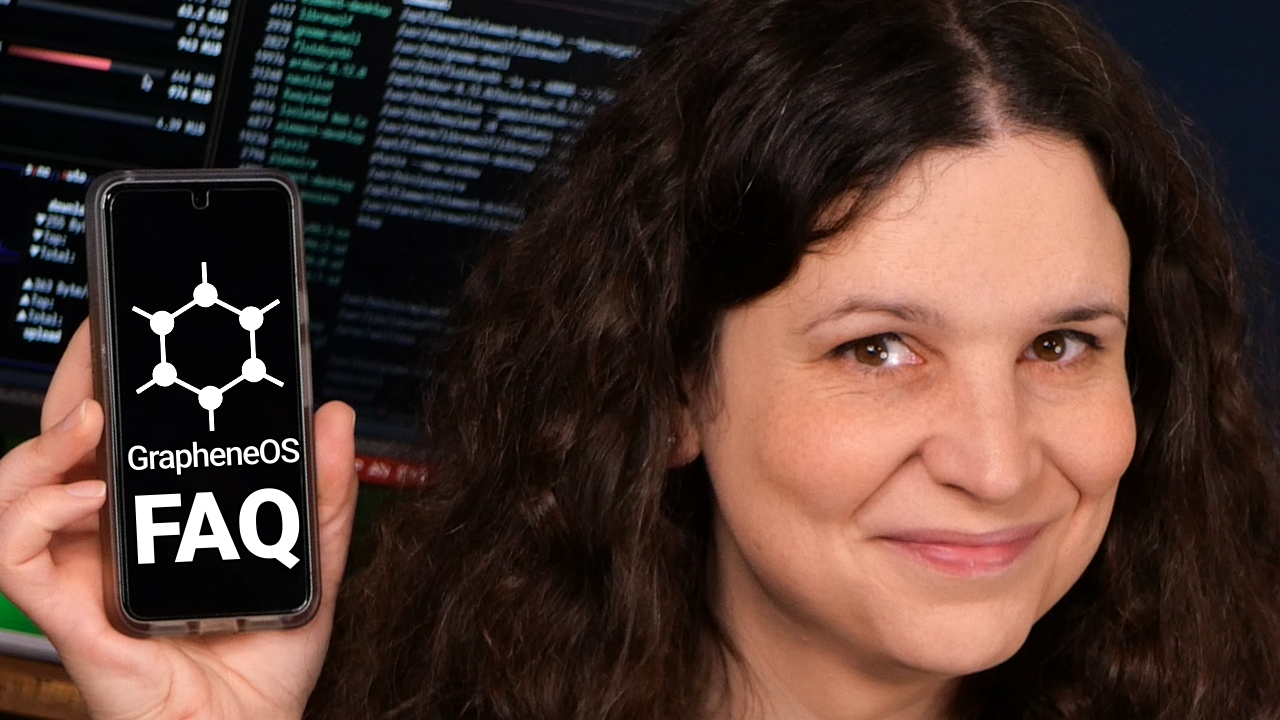
I've used GrapheneOS for three years now as my everyday mobile OS, and I'm satisfied with it! In fact, a few days ago I put out a video about it:
My most recent GrapheneOS video on PeerTube. If you prefer watching on YouTube, here's a link.
Since I started using GrapheneOS, and especially since putting out this video, I've received a lot of questions- ranging from understandable concerns to misconceptions. I'd like to answer those questions in one place, so I have one link to share!
Skip to your favorite question:
- Isn't GrapheneOS too hard to install?
- But banking apps don't work, right?
- Yeah, right, like I'm gonna buy a Google Pixel phone to get away from Google.
- Why is GrapheneOS limiting my freedom to install their OS on whatever phone I want?
- Why not use an unofficial build of GrapheneOS on an unsupported device?
- What about Lineage? Sailfish? /e/?
- Won't Android become closed off soon anyway?
- Why bother with privacy?
Isn't GrapheneOS too hard to install?
I first flashed an Android OS (what we often colloquially and erroneously call a "ROM") on my T-Mobile G1 about a hundred years ago or so- the process of installing GrapheneOS is nothing like that. At least not today- there's no "fastboot cable", no terminal commands for me to bork, no sketchy third party websites for firmware downloads.
Basically, assuming you have a Pixel and you've backed up any info on the phone, all you do is:
- Enable developer mode from the stock Pixel OS,
- Plug your phone in while browsing the GrapheneOS install page from a Chromium-based web browser, and
- Follow the prompts on the page to install GrapheneOS.
It's very forgiving. I didn't cover it because the process hasn't changed much from my first installation video years ago (PeerTube/YouTube)- you can watch that if you want a more step-by-step video tutorial, but the best thing you can do is go to the GrapheneOS install page and just read it for yourself. It's very in-depth!
But banking apps don't work, right?
This is a big misconception. There are undoubtedly some apps that don't work with GrapheneOS- but the known list is actually much smaller than you may have been led to believe. I run banking apps on my tablet which uses GrapheneOS- it's fine!
Note that some applications might throw an error due to exploit protection... remember that GrapheneOS hardens Android, so apps that don't like the hardened OS might throw a fit. The thing is, that's actually pretty solvable within GrapheneOS, who have a whole section of their website devoted to it:

There's also a community-supported list of banking apps that are known to work, which is awesome and a resource folks should check out:
 akc3n, Tommy, spring-onion
Yeah, right, like I'm gonna buy a Google Pixel phone to get away from Google.
That isn't a question, but I'm still gonna answer it!
First off, as I mentioned a couple of times in the recent video, GrapheneOS is working with an OEM to bring the OS to another brand's devices- we now know that this OEM is Motorola, and that's a great thing! While I'm not aware of any plans to officially backport GrapheneOS to existing Motorola devices, I am looking forward to a non-Pixel option for GrapheneOS fans.
Second, folks have to remember that not everyone has the same threat profile. Reasonable people can disagree over the degree in which they want Google's devices and services in their lives, and managing privacy on the internet will always involve a certain amount of give-and-take. For some people, giving Google any money at all is an unworkable solution, for others, it's not a deal-breaker. Neither position is unreasonable- it all comes down to your own personal priorities.
Which brings me to the related question...
Why is GrapheneOS limiting my freedom to install their OS on whatever phone I want?
They aren't.
Their software is open source. You can do whatever you want with it, provided you follow the open source licensing.
They built an OS for a specific device. That's not restricting your freedom in any way, and I have to chuckle a bit at this line of thinking because it doesn't scale well.
If I build and distribute a piece of software for the Commodore 64, I'm not "restricting your freedom" to use it on the ZX Spectrum. That's so silly!
Until recently, GrapheneOS made a choice, as builders of software, to focus on a specific brand's hardware. They're under no obligation to support anyone else's. They make a thing you can download for free!
And like I said above, if you don't like it, the code's right there.
Why not use an unofficial build of GrapheneOS on an unsupported device?
Because I won't tell people on the internet to use something that's so "unsupported".
There's lots of reasons for that decision, but a big one is that every video I make triggers thousands of comments, questions, etc etc. The last thing I want is to lead people down a rabbit hole where they end up with bricked phones, or worse, insecure devices. I don't want to wake up to a thousand comments from folks who broke their bootloader and want me to fix it.
Plus, I think recommending something that I can't possibly test well (being that I'm not a security researcher) would be a bit irresponsible of me, and that's my choice. I try to stick with things I can confirm, and leave the speculation to other channels.
What about Lineage? Sailfish? /e/?
Those are their own projects!
We do this thing a lot on the Internet- I mentioned that I use GrapheneOS and someone assumes I don't like LineageOS. It's the waffles/pancake meme (you can look it up if you don't know).
I can speak to LineageOS since I've used it- it's fine! I don't use it every day for two main reasons:
- I like GrapheneOS' hardening, and
- I prefer the sandboxed Google Play approach in GrapheneOS over the typical LineageOS microg approach personally.
If GrapheneOS went away, I'd probably go to LineageOS, but I'd miss the hardening features of GrapheneOS.
Now, about Sailfish and /e/, those look interesting. But, I don't have access to the specific devices they recommend, so I can't really try them or form any opinions. I chuckle a bit because this echoes some of my commenters' complaints about Pixels:
- "You could install it on a Sony Xperia something or other" as though I just... had one?
- "Get a Fairphone!" as though they routinely ship to the US?
I get it, my videos aren't geolocked so my commenters come from a variety of locations and perspectives. I certainly don't fault someone for wanting to get away from Android in the interest of leaving US tech behind. Again, everyone's threat profile is different.
In my case, I'm stuck in the US, I don't think those European carriers are going to help me much. If you're reading this and work for one of them, I'd love to talk though! (Also, do you sponsor visas? 😳)
Won't Android become closed off soon anyway?
There's a lot of speculation out there right now over this, and I'm not a lawyer, so I'm going to say "I don't know." But I will give some context which I cut from my recent video (my first draft was 45 minutes long).
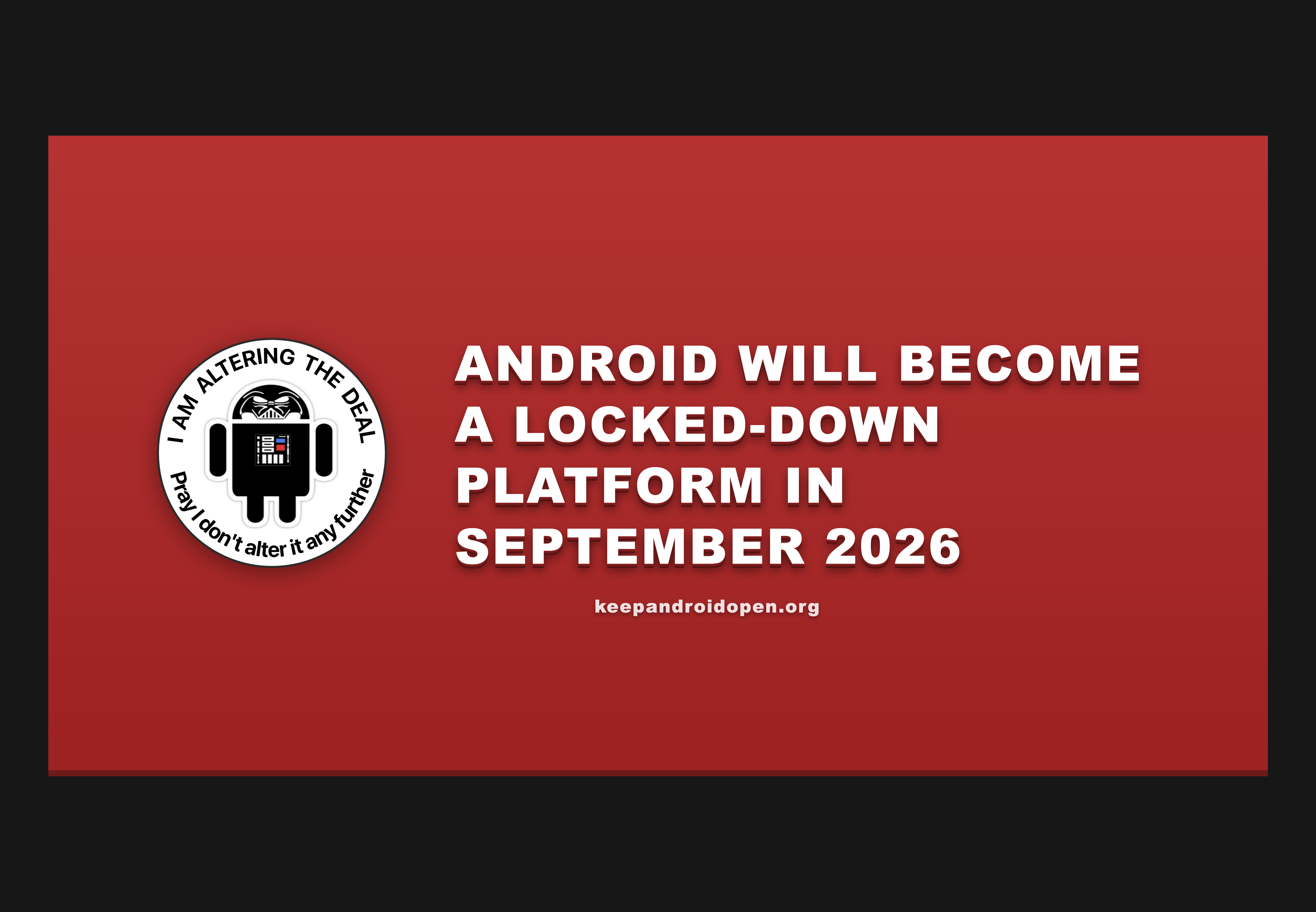
Basically, the theme of this question is "Android is making moves to lock down the developer ecosystem and that puts third party OSes and Android devs at risk." This idea is in response to Google launching an Android Developer Verification Program, which "will require all apps to be registered by verified developers."
Some members of the community have reacted strongly to this development, and understandably so! F-Droid right now has a full banner up saying "F-Droid is under threat" with a link to a website containing an open letter and additional information:
Again, I don't know what the future holds, and I'm not a lawyer so I'm not going to speculate. If the situation deteriorates rapidly, I might do a followup video or post about it.
Why bother with privacy?
Because I'm not a defeatist. That's why. :)